Generate a Negotiated Care Plan
Turn an assessment PDF into a complete WA Negotiated Care Plan in minutes.
A Negotiated Care Plan is the backbone of an AFH resident record — and writing one by hand from an assessment is slow, repetitive work. VentoFlo reads the resident’s assessment, extracts the care data, and produces a formatted WA-format Negotiated Care Plan you can review, sign, and store. In the same pass it drafts a CARE classification estimate for review.
Step by step
- 1
Open the resident and start the generator
From the resident’s record, scroll to Documents and click “Generate Negotiated Care Plan.” The resident starts with no care plan and no classification — you’ll see both populate by the end.
- 2
Choose the assessment — upload or already on file
Pick where the assessment comes from: upload a fresh PDF from your device, or reuse an assessment already saved to the resident’s Documents — no re-uploading. VentoFlo accepts scanned documents and reads them with AI.
- 3
Let the AI extract the care data
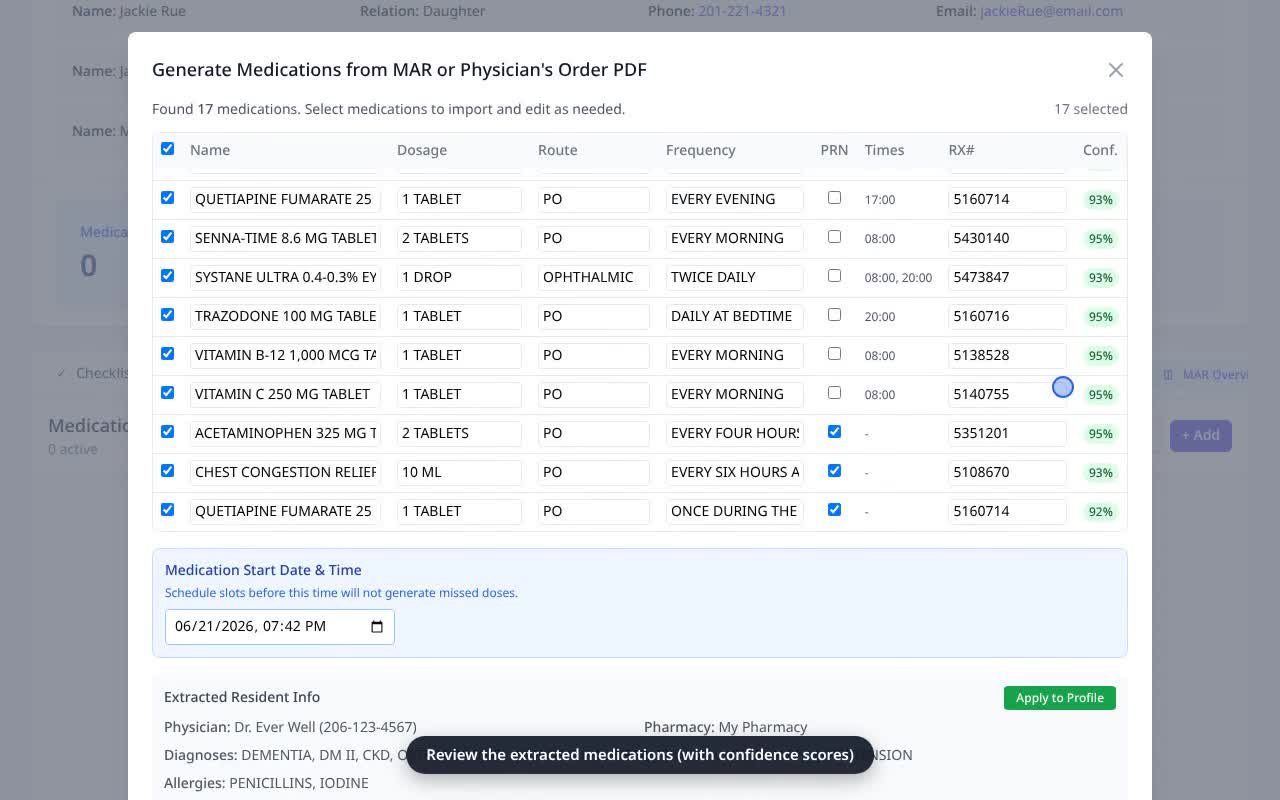
Click “Extract with AI.” The system pulls allergies, diagnoses, ADLs, care preferences, and more, each tagged with a confidence score so you can see what to double-check.
- 4
Accept the resident details it found
When the assessment surfaces details that fill empty profile fields — allergies, medical conditions, physician, pharmacy, case manager — review them and apply the ones you want. Resident identity (name, DOB, room) always stays provider-controlled and is never overwritten.
- 5
Review and generate the plan
Confirm the extracted plan in the editor, then generate. VentoFlo creates the formatted Negotiated Care Plan PDF and drafts a CARE classification estimate for review.
- 6
Open the finished care plan
The completed, WA-format Negotiated Care Plan is saved to the resident’s Documents — ready to download, sign, and present at inspection.
Why it matters
- A current, signed Negotiated Care Plan is a core WAC 388-76 requirement and one of the first documents an inspector asks for.
- Accepting the extracted details keeps the resident’s profile, allergies, and care team current — the same data then flows into the eMAR, ADL tasks, and reports.
- What used to take a caregiver an afternoon becomes a few reviewed clicks, with confidence scores keeping a human in the loop.