
7 Common Medication Documentation Problems in Washington Adult Family Homes (and How to Prevent Them)
The medication log, refusals, order changes, timing, assistance vs. administration, altered meds and disposal: what chapter 388-76 WAC requires and how to stay compliant.
7 min read · Last reviewed November 17, 2026
Medications are where an adult family home carries the most risk, and they're where a licensor spends the most time. The medication rules for Washington AFHs sit in chapter 388-76 WAC (roughly sections 10430 to 10490), and they connect to the nurse delegation rules in chapter 246-840 WAC.
Most medication problems aren't caused by a caregiver giving the wrong pill. They're caused by a record that can't prove what happened. Here are seven of the most common documentation problems and how to prevent each one.
1. Gaps in the medication log (WAC 388-76-10475)
Every resident needs a daily medication log, except residents assessed as independent with self-administration. The log must show the initials of the staff member who assisted with or gave each medication. A blank box doesn't tell anyone whether the dose was missed or given and never recorded, and either way the licensor will treat it as a problem.
Prevent it: Chart at the moment of the med pass, not at the end of the shift. Make missing entries visible the same day, while the caregiver still remembers what happened.
2. Refusals that aren't logged, or the practitioner isn't told (WAC 388-76-10435, -10475)
Residents have the right to refuse medication. When a resident you assist or administer to refuses, two things must happen:
- Notify the practitioner. The exception is when a nurse or other health professional, acting within their scope, can judge the impact of the refusal.
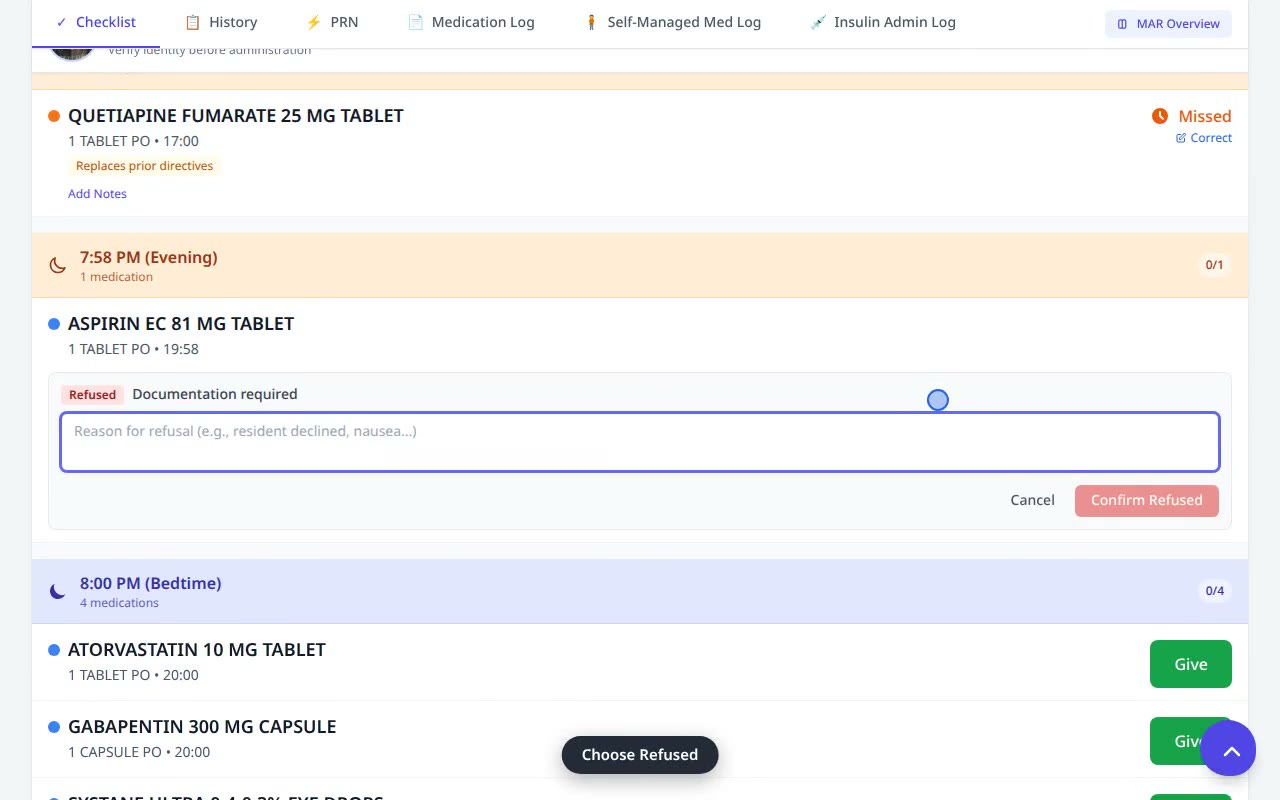
- Log it. The medication log must record the refused dose and the reason.
Prevent it: Treat "refused" as its own charting outcome with a required reason. Don't treat it as a blank box.
3. Order changes without written verification (WAC 388-76-10475)
When a practitioner changes a medication, for example after a hospital stay or a clinic visit, the home needs a logged call requesting written verification of the change. It then needs the written verification itself, which can be mail, fax or electronic, or a new pharmacy-labeled container. MARs that keep showing a discontinued drug, or that show a new dose with no paper trail behind it, are a classic finding.
Prevent it: Update the active medication list the same day an order changes, and file the verification with the resident's record.
4. Doses given at the wrong time, or special directions ignored (WAC 388-76-10470)
Medications must be given at the times the practitioner ordered. When no specific time is ordered, the rule sets spacing. For example, twice a day means about twelve hours apart. Directions such as "before meals," "with food," or "at bedtime" must be followed too.
Prevent it: Build each schedule around the order as written, and give caregivers a clear window for each dose.
5. Confusing medication assistance with administration (WAC 388-76-10450, -10455, -10460)
This is the most misunderstood area in AFH medication rules.
- Self-administration with assistance is for a resident who can put the medication in their own mouth, or apply, inject or instill it themselves, and who knows they're taking a medication. A caregiver may set up the dose, remind or coach the resident, use an enabler such as a cup or straw, and steady or guide the resident's hand for eye, ear or nasal drops and ointments. The caregiver may not do "hand-over-hand" administration (WAC 388-76-10450).
- Administration means giving a medication to a resident who can't self-administer. It must be done by a practitioner, through RN delegation under chapter 246-840 WAC, or by a family member or the resident's representative (WAC 388-76-10455).
- The NCP must state how much medication assistance each resident needs and why (WAC 388-76-10460).
Prevent it: Match each resident's level of assistance in the NCP to what caregivers actually do at the med pass. If a resident can no longer self-administer, put RN delegation in place before caregivers start administering. See RN Delegation in Washington Adult Family Homes.
6. Crushing or splitting medications without a documented consult (WAC 388-76-10465)
Altering a medication, for example by crushing tablets, cutting them in half, or mixing them into food, is allowed only after a practitioner or pharmacist has been consulted and agrees. You must record:
- the date and time of the consult
- the name of the person consulted
- that the resident knows the medication was altered
Prevent it: Record the consult on the medication itself, so every caregiver sees it at every pass.
7. Incomplete disposal records (WAC 388-76-10490)
You need a written disposal policy. It must cover discontinued, expired and refused medications, and medications belonging to residents who have died or been discharged, with disposal within 30 calendar days. Each disposal is recorded with:
- the resident's name
- the medication name
- the amount
- the date of disposal or transfer
- the name of the person completing it
Many homes also have a second person witness every disposal. That isn't written into 388-76-10490, but it's a sensible safeguard, especially for controlled substances.
Prevent it: Log disposals in a structured record with the drug, amount, method, date, and who did it. Avoid loose notes.
Beyond the WAC: practices licensors and pharmacists expect
These go beyond the specific lines of 388-76, but they come up constantly in practice:
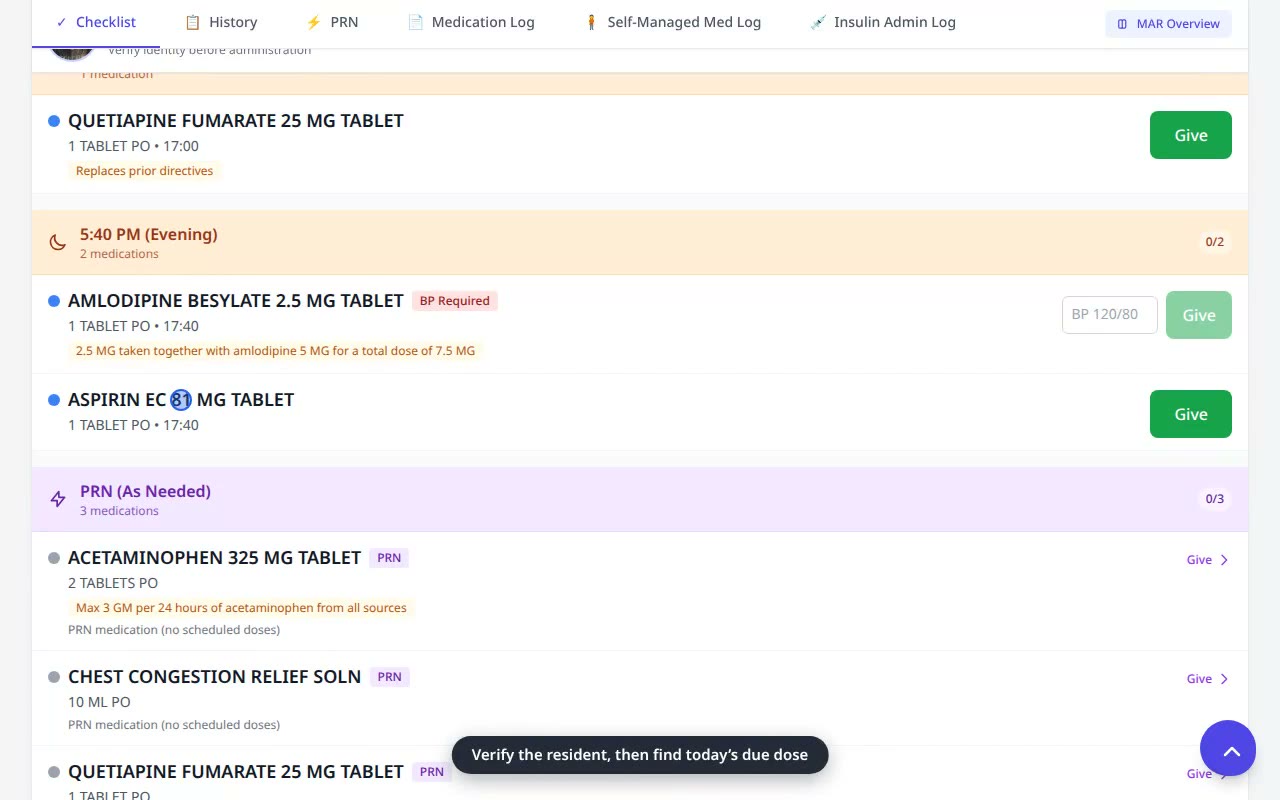
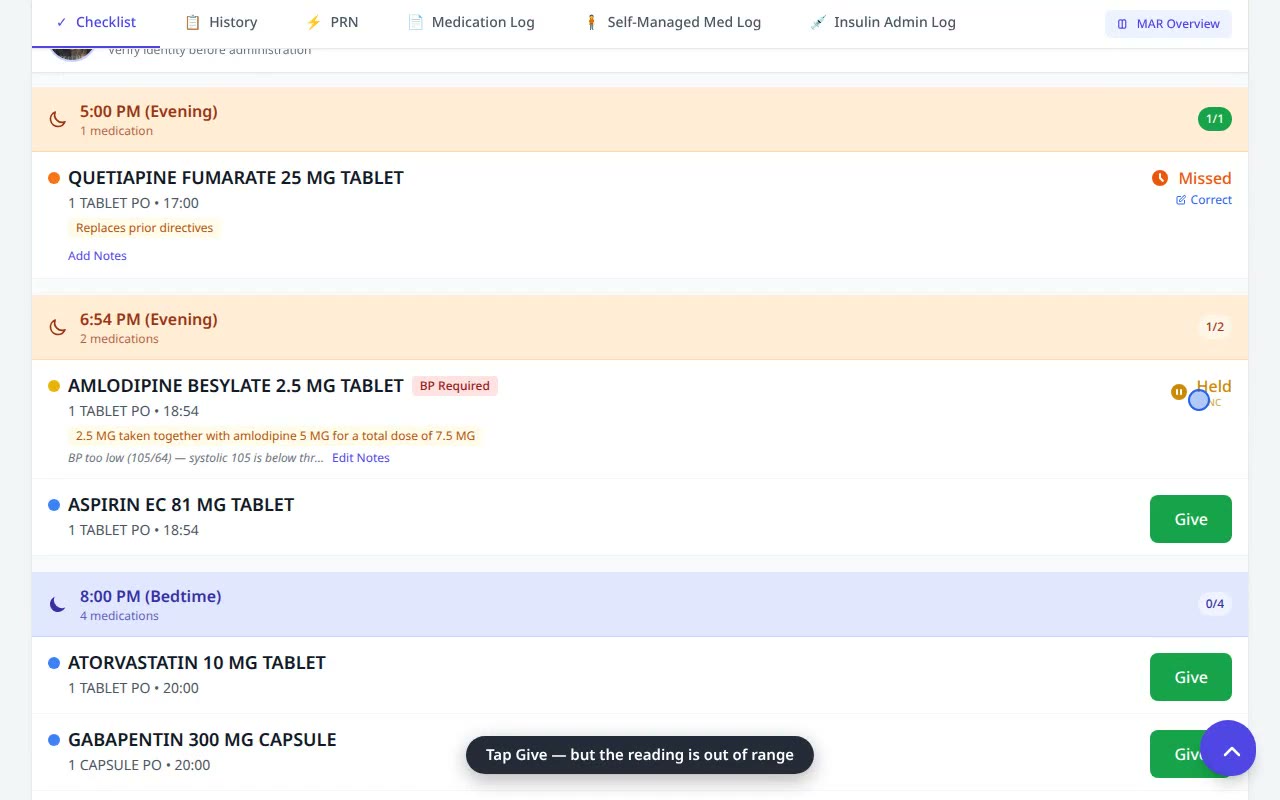
- Vital-sign parameters. If the order says "hold if pulse under 60," take the reading before the dose and record it.
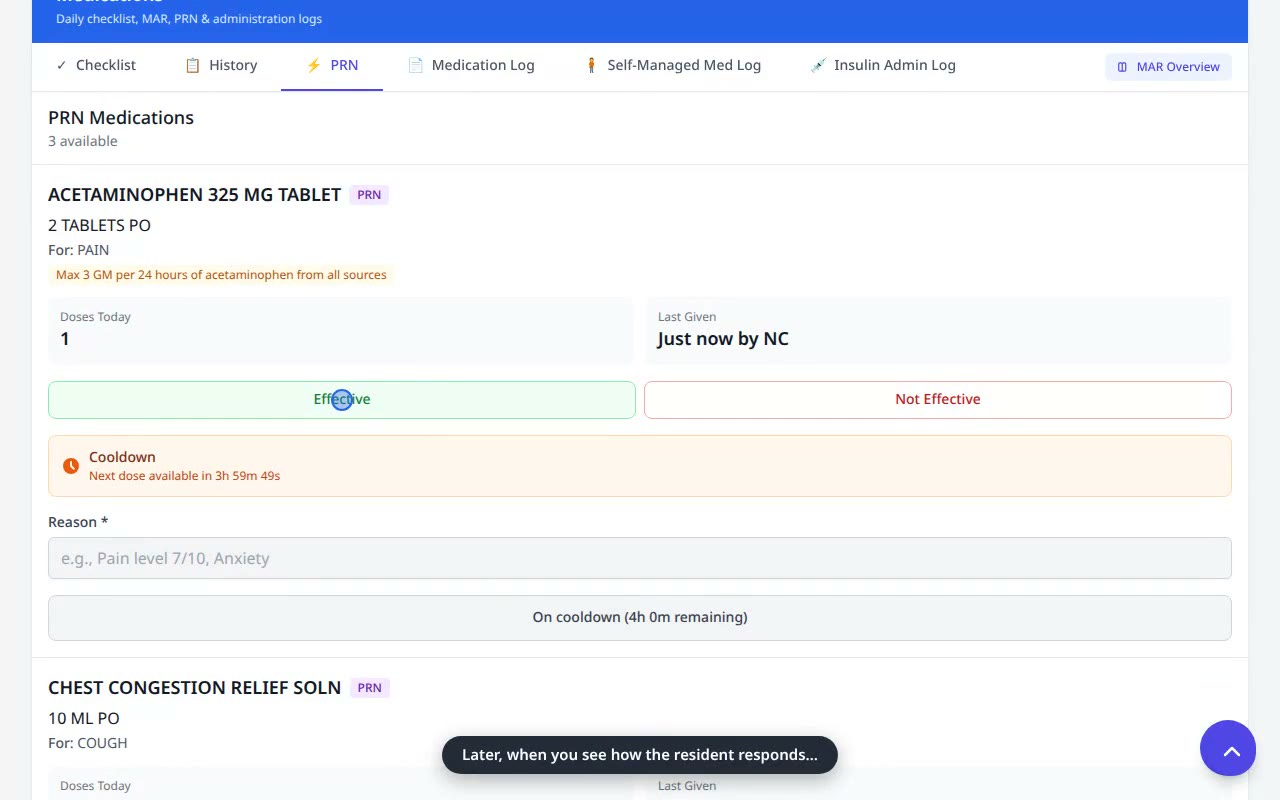
- PRN follow-up. Record why each PRN dose was given and whether it worked.
- Controlled-substance counts. Shift counts with a witness make discrepancies visible quickly.
- Locked storage in original labeled containers (WAC 388-76-10485).
How VentoFlo helps
VentoFlo's eMAR is built for Washington AFHs:
- No double-dosing. Each routine dose slot is locked at the database level, so it can't be charted twice.
- PRN limits. The maximum doses per day and the minimum interval between doses are enforced, and each dose's effectiveness can be recorded.
- Safety pre-checks. Required readings such as blood pressure, pulse and blood glucose are entered at the pass. A reading outside the ordered range automatically holds the dose.
- Refusals are a charting outcome with a reason.
- Disposals are recorded with a witness.
- Alerts go out when scheduled doses haven't been recorded.
Start a 14-day free trial → · See how a safety check holds a dose →
Frequently asked questions
What must the medication log include in a Washington AFH?
Under WAC 388-76-10475, the daily log shows each medication assisted with or given and the initials of the staff member who did it, and it records refused doses with the reason. Residents assessed as independent with self-administration are exempt from the log.
What happens if a resident refuses a medication?
Residents have the right to refuse (WAC 388-76-10435). The home must notify the practitioner, unless a nurse or other health professional acting within their scope can judge the impact of the refusal. The refusal and its reason must also be recorded in the medication log (WAC 388-76-10475).
Can an AFH caregiver give insulin?
It depends on the resident. If the resident injects their own insulin, a caregiver may deliver a prefilled insulin syringe as self-administration with assistance (WAC 388-76-10450). If the caregiver gives the injection, it must be RN-delegated. The caregiver must be a certified home care aide or a certified nursing assistant who has completed DSHS nurse delegation core training and the diabetes training (WAC 388-112A-0550). Other injections can never be delegated.
Can caregivers crush medications or mix them into food?
Only after consulting a practitioner or pharmacist who agrees. The home records when the consult happened and who was consulted, and makes sure the resident knows the medication was altered (WAC 388-76-10465).
How must discontinued or expired medications be disposed of?
The home must have a written disposal policy and dispose of discontinued, expired or refused medications within 30 calendar days. Each disposal is recorded with the resident, medication, amount, date, and the person who completed it (WAC 388-76-10490).
This guide summarizes Washington rules as of the review date above for general information. It is not legal or clinical advice. Confirm requirements against the current text at app.leg.wa.gov and with your pharmacist, delegating RN, and licensor.
Built for Washington adult family homes
VentoFlo maps your daily records to chapter 388-76 WAC: an eMAR that prevents double-dosing, negotiated care plans on the current DSHS form, evacuation drills, RN delegation, and a one-click DSHS inspection bundle with up to 34 sections.
More Washington AFH guides
- Washington AFH DSHS Inspection Checklist: What Licensors Review Under Chapter 388-76 WAC
- How to Write a Compliant Washington Negotiated Care Plan (WAC 388-76-10355)
- How to Run and Document Evacuation Drills in a Washington Adult Family Home
- RN Delegation in Washington Adult Family Homes: Who Qualifies, Consent, Supervision and Records
- CBHS and Form HCA 13-0126: A Guide for Washington Medicaid Adult Family Homes