
How to Write a Compliant Washington Negotiated Care Plan (WAC 388-76-10355)
A step-by-step guide to the Washington AFH negotiated care plan: assessment first, what the plan must contain, the 30-day deadline, signatures and 12-month reviews.
6 min read · Last reviewed November 17, 2026
The negotiated care plan (NCP) is the center of every resident's record in a Washington adult family home. It's the agreement between the home and the resident about what care and services the home will provide and how. The rules are in WAC 388-76-10355 through 10385, and licensors read the NCP against two things: the resident's assessment, and what caregivers actually do.
Here's how to build one that holds up.
Step 1: Start from a current assessment (WAC 388-76-10330 to -10350)
- Assess before admission. You must have a written assessment before admitting the resident. The only exception is a genuine emergency.
- Use the right assessor.
- For DSHS-paid (Medicaid) residents, this is the department case manager's CARE assessment.
- For other residents, it must be a qualified assessor: a licensed nurse with three years of clinical experience, a physician, or a social-services professional who meets the experience requirements (WAC 388-76-10150, -10345).
- Keep it current. Update the assessment after a significant change in condition, when the care plan no longer reflects the resident, when requested, and at least every 12 months (WAC 388-76-10350).
The rule of thumb licensors apply: every need, risk and diagnosis in the assessment should show up in the NCP with a matching plan. If the assessment notes falls or swallowing problems, the NCP should say what caregivers do about them.
Step 2: Have the preliminary service plan in place (WAC 388-76-10340)
Every resident needs a preliminary service plan that covers:
- identified needs
- any care the resident refuses, and the health and safety steps for those refusals
- the resident's goals and preferences
- how the home will meet those needs
The preliminary service plan carries care until the full NCP is finished.
Step 3: Use the current DSHS form
The WAC lists what the NCP must contain, but it doesn't mandate a specific form. DSHS publishes a negotiated care plan template, revised periodically (the current version is dated 3.12.2024). Using the current form is the simplest way to make sure no required element is missed. Older versions are missing sections the newer form includes, such as activity preferences and specialized behavioral programs.
Step 4: Write specific, individualized care and services (WAC 388-76-10355)
Avoid vague entries like "assist with bathing" or "monitor skin." A new caregiver on their first shift should be able to follow the plan. Cover each of these:
- Activities of daily living. For bathing, dressing, toileting, transfers, mobility and eating, give the level of help needed (independent, supervision, limited, extensive or total) and how to give it.
- Medications. State the level of medication assistance and why, and how the resident gets medications when away from the home (WAC 388-76-10460). Also state whether RN delegation is needed.
- Evacuation capability. Mark Independent or Assistance required (WAC 388-76-10870). This must match the assessment and the preliminary service plan.
- Time left unattended. State whether the resident can be left unattended, and for how long.
- Preferences and activities. Include daily routines, food, faith and social preferences.
- Behaviors. List known triggers and the non-drug interventions that work. A resident with significant behaviors may also need a separate behavior support plan.
- Hospice. If it applies, include the hospice plan.
Step 5: Document choices and refusals honestly
When a resident makes an informed choice that carries risk, such as declining a diet or a walker, write down:
- what was discussed
- the risks that were explained
- the alternatives offered
- what was agreed
The same applies when a resident refuses evacuation drills. WAC 388-76-10895(3) requires the refusal and an estimated evacuation time to be documented in the NCP.
Step 6: Involve the right people (WAC 388-76-10370)
The NCP is developed with:
- the resident
- family, if the resident approves
- the resident's representative
- any professionals involved in their care
- anyone else the resident wants
- for DSHS-paid residents, the department case manager
Step 7: Meet the deadlines and get the signatures
| Requirement | Rule |
|---|---|
| Completed within 30 days of admission | WAC 388-76-10360 |
| Implemented as written | WAC 388-76-10365 |
| Signed and dated by the resident and the home | WAC 388-76-10375 |
| Copy to the DSHS case manager after each completion or update, once signed (DSHS-paid residents) | WAC 388-76-10385 |
| Reviewed after a significant change, when it no longer meets needs, on request, and at least every 12 months | WAC 388-76-10380 |
If a representative signs for the resident, keep the document that shows their authority, such as a power of attorney or guardianship order (WAC 388-76-10325).
How VentoFlo helps
- Draft from the assessment. Upload the resident's assessment, and VentoFlo's AI extracts the care data and drafts the NCP on the current DSHS form for you to review. Each extracted item comes with a confidence score so you know what to double-check.
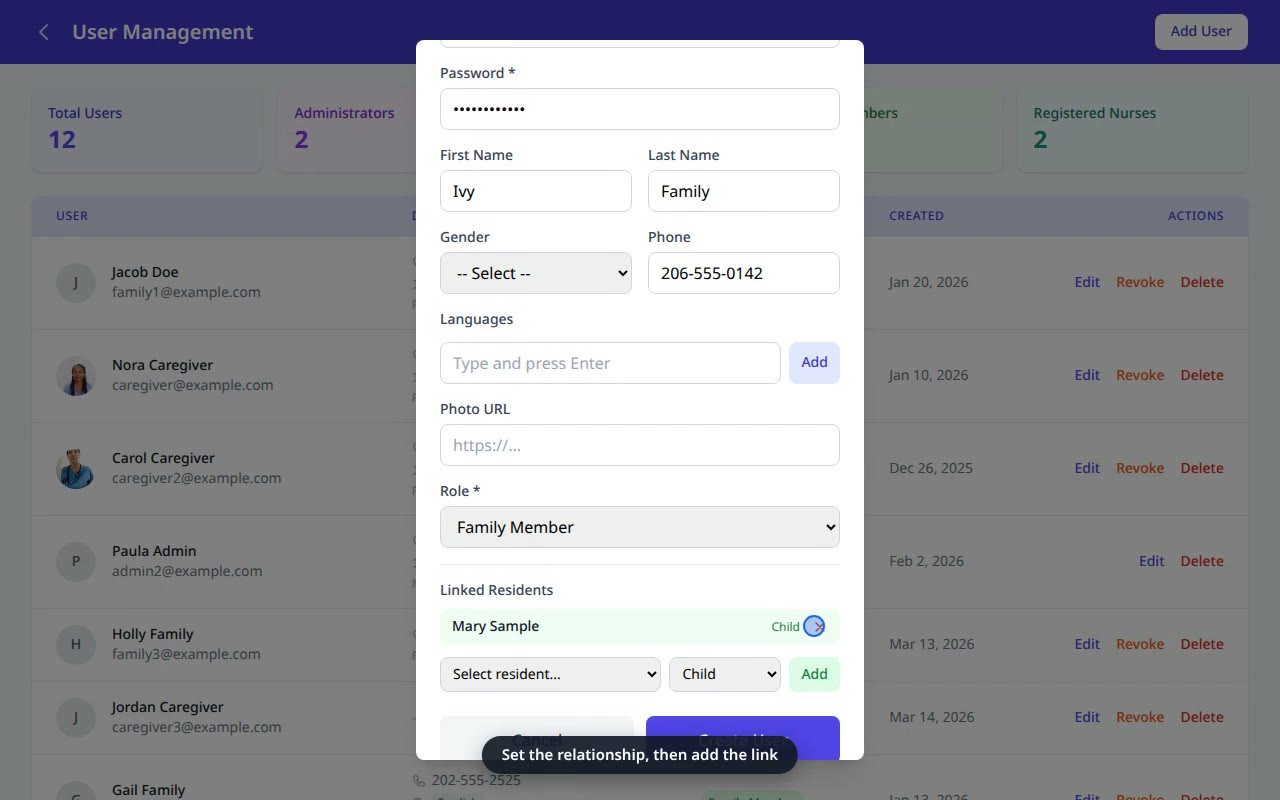
- Versions and e-signatures. Plans move from draft to finalized and keep their version history. Authorized family members can review and e-sign through the family portal.
- Caregiver tasks. Generating a plan updates the caregivers' daily ADL tasks to match.
Watch the NCP how-to → · Start a 14-day free trial →
Frequently asked questions
How many days does a Washington AFH have to complete the negotiated care plan?
The negotiated care plan must be developed and completed within 30 days of the resident's admission (WAC 388-76-10360). A preliminary service plan covers the resident until then (WAC 388-76-10340).
How often must a negotiated care plan be reviewed?
At least every 12 months. It must also be reviewed after an assessment for a significant change, whenever it no longer meets the resident's needs, and when the resident or others request it (WAC 388-76-10380).
Who must sign the negotiated care plan?
The resident and the adult family home must sign and date it (WAC 388-76-10375). For DSHS-paid residents, the home also sends the signed plan to the department case manager (WAC 388-76-10385).
Can a negotiated care plan be signed electronically?
Washington's Uniform Electronic Transactions Act (chapter 1.80 RCW) gives electronic signatures legal recognition. A sound e-signature process records who signed, shows that they intended to sign, and timestamps the signature on a version that can't be changed afterward.
Does Washington require the DSHS negotiated care plan form?
WAC 388-76-10355 lists what the plan must contain rather than mandating a specific form. DSHS publishes a template, and using its current version is the most reliable way to make sure every required element is covered.
This guide summarizes Washington rules as of the review date above for general information. It is not legal advice. Confirm requirements against the current text at app.leg.wa.gov and with your licensor or case manager.
Built for Washington adult family homes
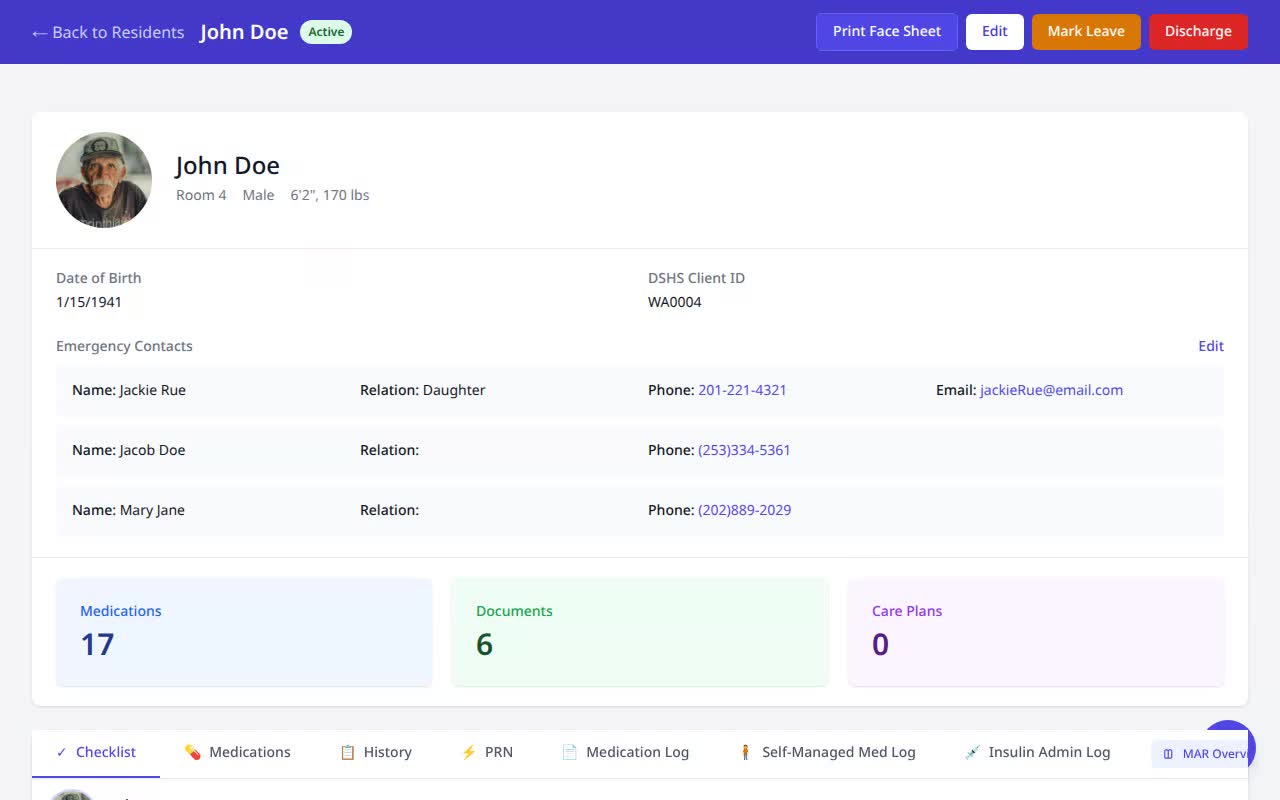
VentoFlo maps your daily records to chapter 388-76 WAC: an eMAR that prevents double-dosing, negotiated care plans on the current DSHS form, evacuation drills, RN delegation, and a one-click DSHS inspection bundle with up to 34 sections.
More Washington AFH guides
- Washington AFH DSHS Inspection Checklist: What Licensors Review Under Chapter 388-76 WAC
- 7 Common Medication Documentation Problems in Washington Adult Family Homes (and How to Prevent Them)
- How to Run and Document Evacuation Drills in a Washington Adult Family Home
- RN Delegation in Washington Adult Family Homes: Who Qualifies, Consent, Supervision and Records
- CBHS and Form HCA 13-0126: A Guide for Washington Medicaid Adult Family Homes